What a turboprop costs to charter
Turboprop cost typically runs $2,200 to $3,500 per flight hour. A New York to Miami trip, 949 miles, often quotes $8,000 to $12,500. Here is where those figures come from and when a turboprop suits your trip.
- $2,200–$3,500per flight hour
- 6-8seats filled
- 1,500 nmusual range
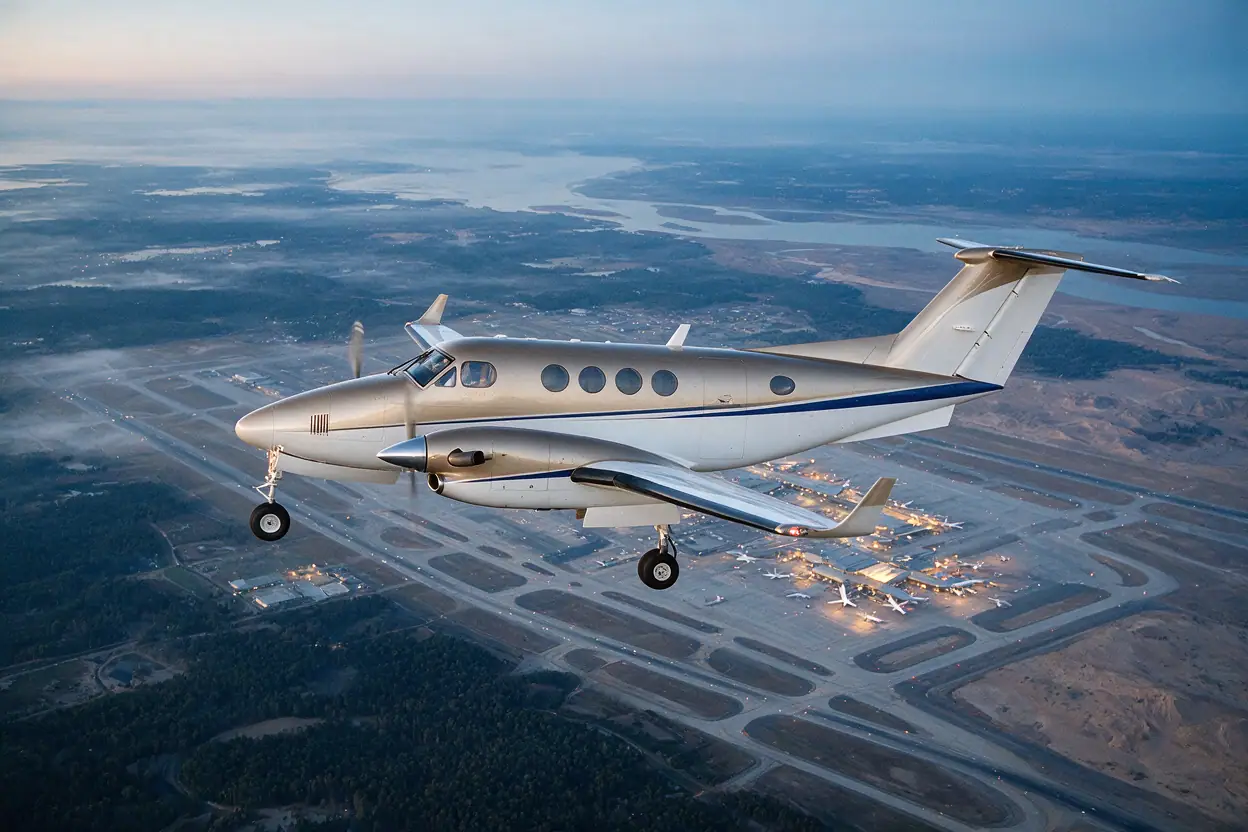

A turboprop sits between a piston twin and a light jet in both speed and price. The class cruises near 300 knots and carries six to eight passengers, so it handles regional legs efficiently while keeping the hourly rate below most jets. On a charter quote, the hourly figure is the anchor, and other costs, fuel, crew, landing fees, build around it.
The hourly band of $2,200 to $3,500 covers the class overall. Within it, a newer airframe with faster cruise and taller cabin prices toward the top, and a shorter regional leg toward the bottom. Because charter prices are estimates that move with aircraft choice and date, treat any quote as a starting point and confirm it before you commit.
Daher TBM 960
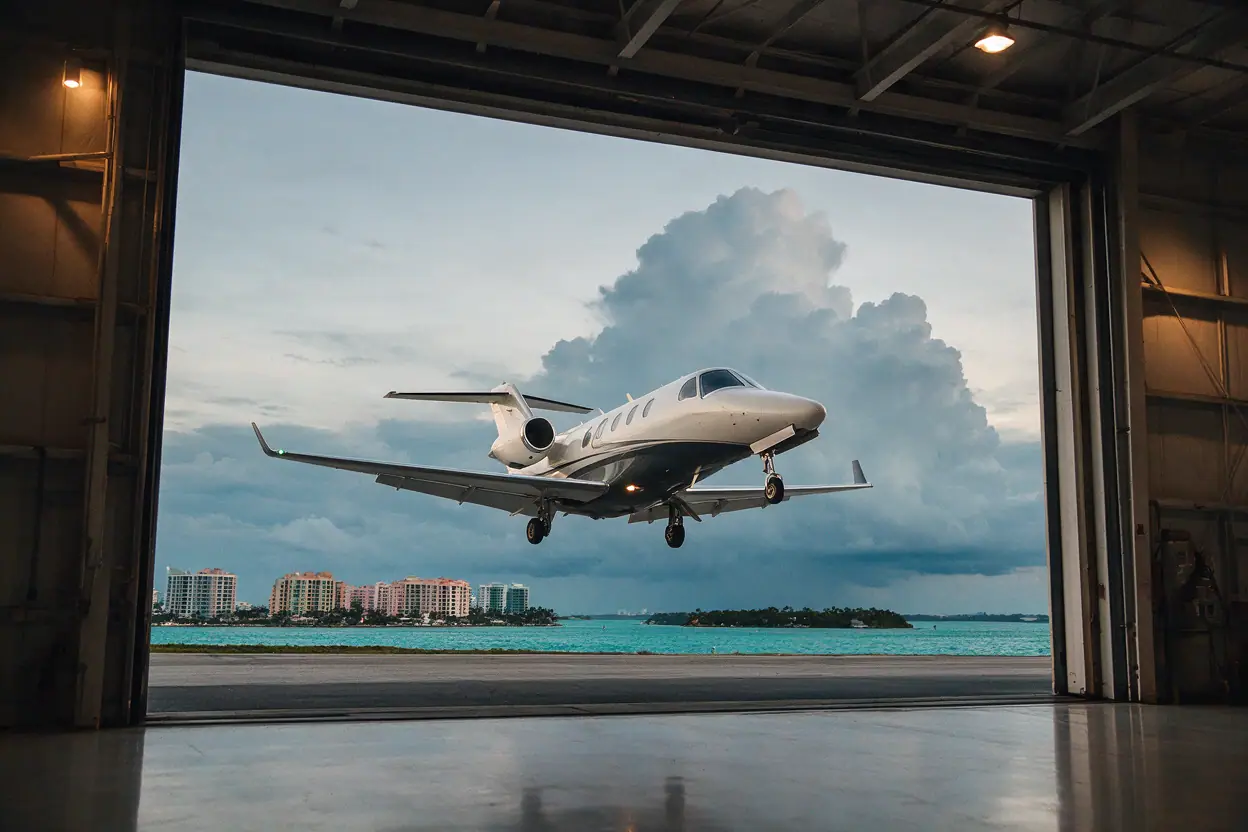
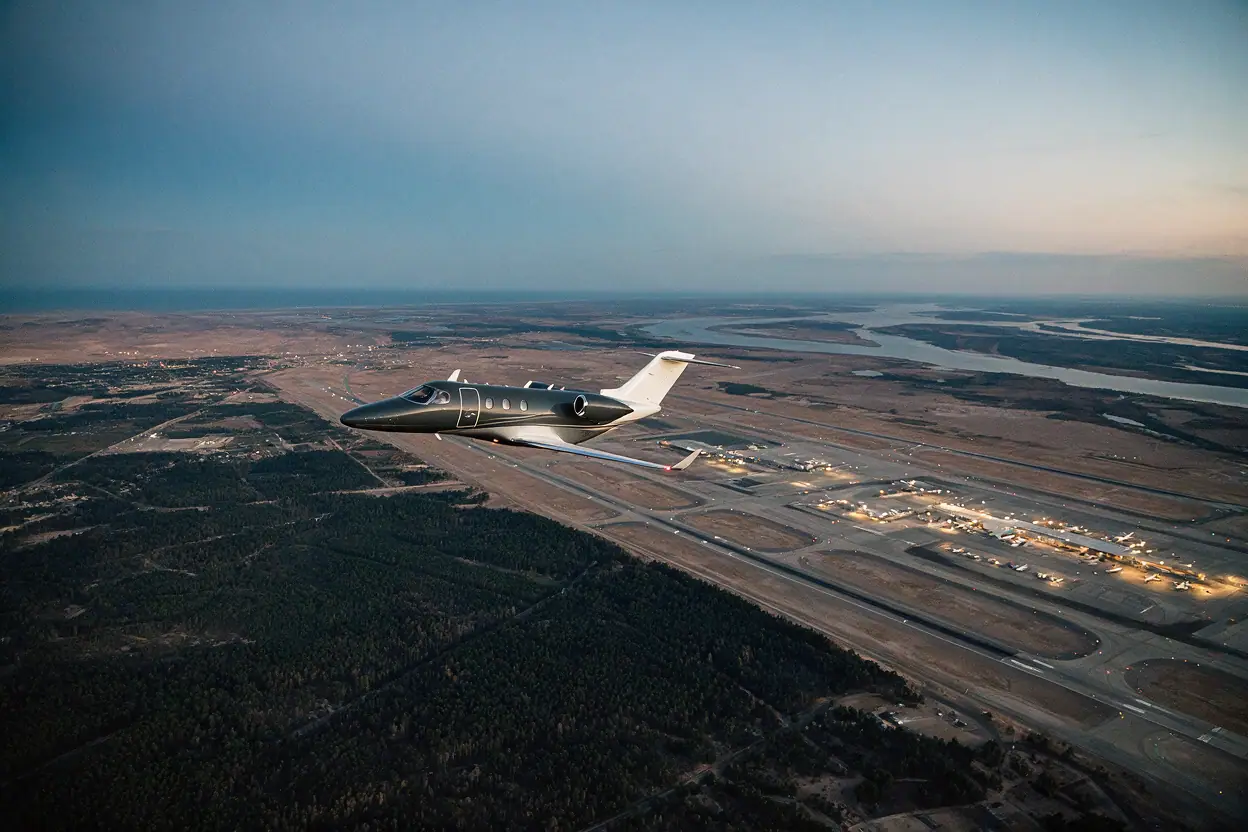
The Daher TBM 960 is the fast end of the class, cruising at 330 knots with a range of 1,730 nautical miles and seating six. The cabin measures 4 ft tall and 13 ft 3 in long, with 32 cu ft of baggage, so it suits a small party traveling light and moving quickly. On a long regional leg it trims real time off the trip, and the hourly rate reflects that.
- 6 pax
- 330 kt cruise
- 1,730 nm range
- 32 cu ft luggage
- 987 recorded in US
Beechcraft King Air 350i
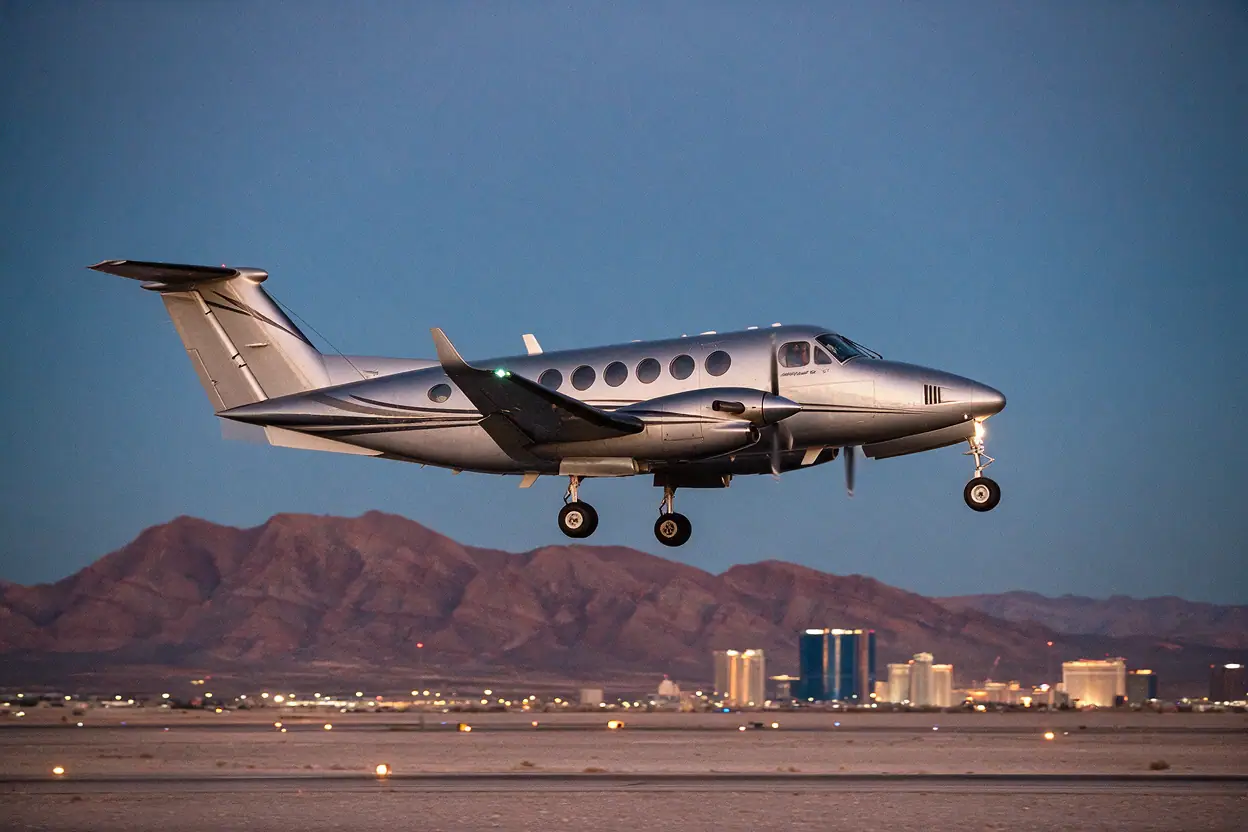
The Beechcraft King Air 350i trades a little cruise speed for space, carrying eight at 312 knots over 1,800 nautical miles. The cabin is 4 ft 9 in tall and 16 ft 8 in long, with 55 cu ft of baggage, which changes what a group of six or seven can bring. It is the pick when the passenger count or the luggage is the constraint rather than the clock.
- 8 pax
- 312 kt cruise
- 1,800 nm range
- 55 cu ft luggage
- 748 recorded in US
When a turboprop is the right call
- Short regional legs under two hours keep the hourly rate modest and end before a jet would finish climbing. The Los Angeles to Las Vegas run, 199 miles, flies in about an hour and quotes $2,200 to $3,500.
- Airports with shorter runways than a jet wants, where a turboprop can still operate and put you closer to your destination. Mountain strips and small county fields are the usual case, and field performance is a large part of why the class exists.
- If four passengers want to work through a three-hour flight, then cabin size is worth more than a few knots of cruise.
- Routes within the class range of 1,500 nautical miles, covering most of the eastern seaboard and shorter Western corridors nonstop. Beyond that, plan on a fuel stop or a different class; for example, when you need New York to Los Angeles nonstop, then a jet is the better comparison.
What the quoted numbers do not cover
Every figure here is an estimate for the aircraft and the route, not a firm price. Date, demand, crew duty time and the specific tail number all move the final number, and a holiday week can sit well above the band shown. Ask for a written quote against your actual dates before you plan around a figure.
Turboprops also have practical ceilings. The class range of 1,500 nautical miles is a planning number, and headwinds or a full cabin can shorten it. New York to Los Angeles is 2,129 miles and does not go nonstop in this class, so the quote reflects a stop and a longer day. If the schedule is tight, then compare a jet before you decide.
Turboprop costs along frequent routes
Sample turboprop quotes on common US routes show the shape of the pricing. Distances run from 96 miles on the Denver to Aspen hop to 2,129 miles on New York to Los Angeles, and the quote scales with block time rather than raw mileage alone.
Turboprop charter durations and fares by route
On a turboprop, these 11 routes take 0h 38m to 8h 49m, with single-leg estimates ranging $2,200 to $31,000.
| Trip | Dur. | One-way est. |
|---|---|---|
| New York → Miami | 3h 37m | $8,000–$12,500 |
| New York → Los Angeles | 8h 30m + stop | $18,500–$30,000 |
| Los Angeles → Las Vegas | 1h 00m | $2,200–$3,500 |
| New York → Palm Beach | 3h 27m | $7,500–$12,000 |
| Los Angeles → San Francisco | 1h 17m | $3,000–$4,500 |
| New York → Las Vegas | 7h 49m + stop | $17,000–$27,500 |
| San Francisco → Las Vegas | 1h 33m | $3,500–$5,500 |
| Denver → Aspen | 0h 38m | $2,200–$3,500 |
| Houston → New York | 5h 22m + stop | $12,000–$19,000 |
| Dallas → New York | 4h 28m | $10,000–$15,500 |
| Los Angeles → Honolulu | 8h 49m + stop | $19,500–$31,000 |
FAQ
What does turboprop cost per hour?
Expect $2,200 to $3,500 per flight hour for the class, with the exact rate set by the airframe, the date and the route. A newer, faster aircraft prices near the top of that band and a shorter regional leg near the bottom. The hourly rate is an estimate, so confirm it in writing for your dates.
How much is a turboprop charter from New York to Miami?
That route is 949 miles and quotes from $8,000 to $12,500, with a block time of about 3h 37m. It goes nonstop in this class. Pricing moves with the day of the week and how far ahead you book, and the estimate assumes a standard passenger load.
Can a turboprop fly New York to Los Angeles nonstop?
No. The route is 2,129 miles against a class range of 1,500 nautical miles, so it needs a fuel stop and quotes from $18,500 to $30,000 over roughly 8h 30m. If a single leg matters more than the hourly rate, then compare a jet for that trip.
What is the shortest turboprop trip worth quoting?
The Denver to Aspen hop is 96 miles and flies in about 38 minutes, quoting from $2,200 to $3,500. Short legs still carry fixed costs, so the hourly rate looks high on paper. The value is in the airport pair and the time saved on the ground.
How many passengers fit on a turboprop?
The class carries six to eight passengers depending on the airframe. The Daher TBM 960 seats six and the Beechcraft King Air 350i seats eight. Baggage space differs too, at 32 cu ft and 55 cu ft, so match the aircraft to your party and luggage.
Does a turboprop cost less than a jet on the same route?
On short regional legs it usually does, because the hourly band sits below most jet rates and the block time is close. On long legs the slower cruise erases the advantage, since the aircraft is in the air longer. Compare the total quote for the trip, not just the hourly figure.